

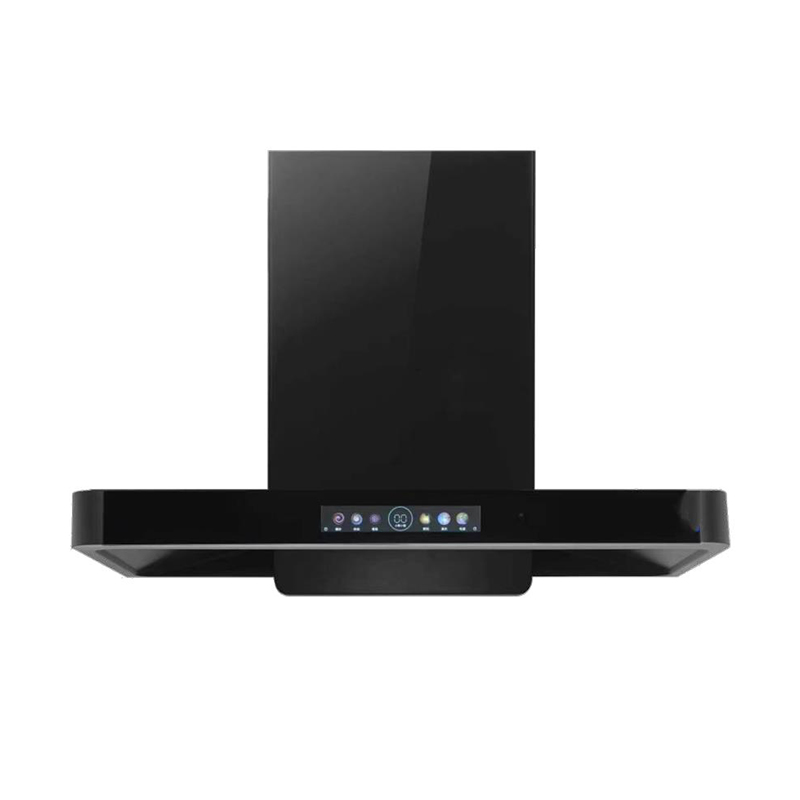
US Range Hood Market Surges as Kitchen Ventilation Becomes Top Priority: 2025 Industry Report
By HuabaRangeHood.com | March 30, 2025

Table of Contents
Executive Summary: Market at a Glance
The US range hood and kitchen ventilation market is experiencing significant growth in early 2025, driven by updated building codes, the surge in home renovation, and heightened consumer awareness of indoor air quality. According to the Home Ventilation Institute (HVI) and market research firm Freedonia Group, the residential range hood market is projected to reach $4.2 billion by 2027, growing at a CAGR of 6.8%. Key factors include the rising adoption of induction cooktops (which require dedicated ventilation), stricter energy efficiency standards, and a shift toward smart, ducted systems that integrate with whole-home automation. "Kitchen ventilation is no longer an afterthought—it's a critical component of modern home design," said Mark Wilson, HVI's technical director.
Key Market Drivers Behind Range Hood Growth
Several distinct factors are fueling demand across the United States. First, updated building codes in states like California, New York, and Massachusetts now mandate higher minimum airflow (CFM) and make-up air provisions for kitchens, pushing builders to install more powerful range hoods. Second, the post-pandemic home renovation boom continues: according to the National Kitchen & Bath Association (NKBA), 71% of kitchen remodels now include a range hood upgrade, up from 58% in 2020. Third, consumer interest in indoor air quality has spiked; studies link cooking emissions to respiratory issues, prompting homeowners to seek high-capture hoods with features like auto-sensing and delayed shutoff. Fourth, the growth of open-concept floor plans demands quieter, more effective ventilation that operates without dominating the aesthetic.
US Builder & Retailer Case Studies
Case Study 1: National Homebuilder – Lennar Corporation
Lennar, one of the largest US homebuilders, announced in Q1 2025 that it will standardize 600-CFM under-cabinet range hoods with integrated smart controls across all its "Next Gen" communities. The decision follows pilot testing where homes with upgraded ventilation saw 14% faster sales and received higher satisfaction scores related to indoor air quality. Lennar's VP of purchasing noted, "Homebuyers now ask specifically about ventilation—they connect it to health and modern cooking."
Case Study 2: Major Retailer – Home Depot
Home Depot reported that its premium range hood category (priced $500+) grew 27% year-over-year in 2024, with even stronger growth in early 2025. A spokesperson highlighted that consumer searches for "smart range hood with app" and "low-sone range hood" tripled. The retailer expanded its in-store kitchen ventilation showrooms to 400 locations to cater to this demand.
Case Study 3: Luxury Remodeling Firm – California Kitchens
A high-end remodeler based in Los Angeles reported that all projects now include custom hood inserts with at least 900 CFM and makeup air systems. Principal designer Sara Chen stated: "Clients used to care about aesthetics only. Now they ask about capture efficiency, noise levels, and integration with their smart home. We've shifted entirely to recommending hoods with auto-adjusting fans and heat sensors."
Emerging Trends: Smart & Energy-Efficient Hoods
The range hood market is rapidly evolving toward connected, intelligent appliances. Key trends identified by the Association of Home Appliance Manufacturers (AHAM) include: 1. Smart Ventilation: Hoods with Wi-Fi, app control, voice activation, and integration with smoke/CO detectors are seeing 31% annual growth. 2. Energy Efficiency: ENERGY STAR certified range hoods now account for over 35% of new installations, driven by both utility rebates and consumer preference. 3. Design-Forward Aesthetics: Professional-style stainless steel, downdraft units for islands, and minimalist glass canopies are top sellers. 4. Improved Filtration: Demand for ducted hoods with high static pressure and dishwasher-safe baffle filters is up 22% from 2024.
Expert Insights on Ventilation Standards & Health
Dr. Emily Zhang, an indoor air quality researcher at Lawrence Berkeley National Laboratory, emphasized: "Cooking generates PM2.5 particles, nitrogen dioxide, and volatile organic compounds. A properly sized, correctly installed range hood is the most effective way to reduce exposure. We're seeing code bodies respond to this science." Industry consultant Michael O'Brien added: "Builders and remodelers are treating range hoods as a margin opportunity—clients happily upgrade from $300 builder-grade units to $1,200+ high-performance systems when the health and cooking benefits are explained." The NKBA recommends hoods that are at least as wide as the cooking surface and provide 100 CFM per 12 inches of stove width for electric, and 150 CFM for gas.
Future Outlook: 2025-2027 Market Projections
Freedonia Group: Residential range hood demand in the US is forecast to increase 6.8% annually through 2027, reaching $4.2 billion. AHAM: Smart hood penetration is expected to surpass 25% of units by 2027, up from 12% in 2024. HVI: Certification for performance (capture efficiency, noise) is becoming a key marketing tool; manufacturers investing in third-party testing and labeling will capture premium segments. For OEM/ODM suppliers like Huaba, the outlook is favorable: US builders and brands increasingly seek partners with proven manufacturing capacity, compliance with North American standards (UL/cUL), and ability to offer smart features and custom designs. With the continued shift toward induction cooking and tighter building codes, the need for reliable, high-performance range hoods will only intensify.